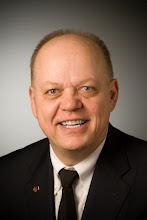
Update on 8/28/08: Lee Majeskie's obituary and a slideshow of pictures can be found on our department's website.
DairyScienceMark
========================
I just distributed the following to the virtual community of dairy professionals we call "Dairy-L."
"Dear Friends,
"It is my sad duty to share with you the news that Dr. J. Lee Majeskie died of a heart attack on Friday night, 22 August 2008. He had retired recently and held the rank of Associate Professor Emeritus and Extension Specialist in the Department of Animal & Avian Sciences at the University of Maryland at the time of his death.
"Lee was born and raised on a dairy farm near Pewaukee, WI and he received his BS and MS degrees from the University of Wisconsin. He received his Ph.D. degree in animal genetics from Kansas State University in 1970. Lee served as Director of Program Development for the Brown Swiss Cattle Breeders Association until 1975, when he joined the faculty in the Department of Dairy Science at the University of Maryland. Lee worked with the DHI program statewide, regionally and nationally and aided in a number of youth 4-H programs.
"Accomplishments include coaching the Maryland 4-H dairy cattle judging team for 25 years, placing in the top three nationally 18 times during those 25 years and winning the contest five times. Living in a small state with increasing urbanization, Dr. Majeskie initiated a dairy leasing program that allowed non-farm 4-H youth to lease a dairy animal and participate in dairy projects, including showing. This leasing program celebrated its 20th anniversary in 2008. Dr. Majeskie also taught courses on campus and was the faculty adviser for the Animal Husbandry Club for a number of years. The Club hosts dairy/swine/beef/sheep shows that form the foundation of a college-wide 'county-fair like event' each April that was called Ag Day, allowing dozens of undergraduates to gain meaningful large-animal handling experience annually. Ag Day has evolved into a campus-wide event called Maryland Day, which attracts over 50,000 people to campus each year.
"Dr. Majeskie received two prestigious awards recently. He received the American Dairy Science Ass'n Award of Honor at their annual meeting this summer, and he was inducted to the Maryland Dairy Shrine this spring. He has also received numerous honors and awards over the years from 4-H and various dairy cattle organizations.
"Details of memorial services are not available to me at this time, and interested individuals can contact me privately. Cards of condolences can go to Lee's widow at the address below.
[contact me privately at mavarner@gmail.com to get the widow's contact info}
"Sorry to be the bearer of sad tidings this day. Kindest regards to each of you."
I worked with Lee for about 25 years in the Department, and we traveled together in-state often. There was a time when animal/dairy science departments in Land-Grant universities all had tenure-track faculty members who were responsible for and took active participation in 4-H youth programs. While there are a few people left around the US in those positions, most academic departments are not hiring people in tenure-track roles to fill these service roles.
Whether that's right or wrong is a story for another date/time. Let's just say that Lee's death has symbolic significance besides loss for his widow and son.
Hope that helps.
DairyScienceMark
Sunday, August 24, 2008


Wednesday, August 20, 2008
Posilac sold to Lilly's Elanco Animal Health Unit: Updated 10/08
AgWeb.com reports that this sale has been finalized.
===============================================
The Dow Jones Newswire reports that Monsanto is selling the Posilac product (sometribove) that includes the rights to the product and plant to produce the product to Eli Lilly & Co's Elanco Animal Health unit in a posting today. The Lilly press release is also available today.
Elanco has marketed the product outside of the US for some time, so this change makes some sense. The company's press release indicates that the sales force will be merged into the "Elanco business."
Many of the critics of rbST were focused on the 'Monsanto boogeyman' that included genetically modified organizisms. With this split of rbST being sold by one company and Monsanto continuing to sell genetically modified seeds for crops, it will be interesting to watch the critics and see if having multiple targets makes their attacks less visible in the press.
Recently England's royal buffoon, Prince Charles, said in an interview with the UK's Daily Telegraph that increased use of genetically modified organisms to solve the world's food shortage crisis would lead to environmental disaster. Informed members of Parliment called him a "Luddite".
It should be noted that many critics of genetically modified foods, including Prince Charles, have a financial interest in products that compete with conventionally produced food.
Hope that helps
DairyScienceMark
===============================================
The Dow Jones Newswire reports that Monsanto is selling the Posilac product (sometribove) that includes the rights to the product and plant to produce the product to Eli Lilly & Co's Elanco Animal Health unit in a posting today. The Lilly press release is also available today.
Elanco has marketed the product outside of the US for some time, so this change makes some sense. The company's press release indicates that the sales force will be merged into the "Elanco business."
Many of the critics of rbST were focused on the 'Monsanto boogeyman' that included genetically modified organizisms. With this split of rbST being sold by one company and Monsanto continuing to sell genetically modified seeds for crops, it will be interesting to watch the critics and see if having multiple targets makes their attacks less visible in the press.
Recently England's royal buffoon, Prince Charles, said in an interview with the UK's Daily Telegraph that increased use of genetically modified organisms to solve the world's food shortage crisis would lead to environmental disaster. Informed members of Parliment called him a "Luddite".
It should be noted that many critics of genetically modified foods, including Prince Charles, have a financial interest in products that compete with conventionally produced food.
Hope that helps
DairyScienceMark
Wednesday, August 6, 2008
Monsanto's Posilac to be sold
The Wall Street Journal MarketWatch and Feedstuffs reports today (6 August 2008) that Monsanto is selling its Posilac product. No additional details were reported, but the press release is available. The Feedstuffs article was very similar to the text in the WSJ MarketWatch article.
The MarketWatch article quotes Carl Casale, Monsanto's Executive Vice-President of Strategy and Operations.The Posilac product was cited as the "... leading dairy animal supplement." Monsanto will focus on its agronomic seed products, like 'Roundup Ready Soybeans'.
The articles and press releases indicate that the plans are to have the buyer for the Posilac product to continue to market the product so "that loyal dairy farmers continue to receive the value of POSILAC in their operations." An authoritative summary concerning the safety of rbST for both humans and cattle is available for those interested.
It's unclear how and even if this is related to the efforts to have a marketing niche for rbST-free milk, which was discussed in a previous blog posting here in the Dairy Farm Adviser's Coffeeshop. The New York Times had an article on 7 August 2008, quoting representatives of various groups essentially claiming victory by forcing Monsanto out of the market. Monsanto released this press release on the same day that they announced their 4th quarter dividend of 24 cents per share. It should also be noted that late in July of 2008, Monsanto was recommended as a "Powerful Buy" stock by Zacks, reputed to be an industry leader in independent research for stock evaluation.
Interesting stuff! Hope that helps.
DairyScienceMark
The MarketWatch article quotes Carl Casale, Monsanto's Executive Vice-President of Strategy and Operations.The Posilac product was cited as the "... leading dairy animal supplement." Monsanto will focus on its agronomic seed products, like 'Roundup Ready Soybeans'.
The articles and press releases indicate that the plans are to have the buyer for the Posilac product to continue to market the product so "that loyal dairy farmers continue to receive the value of POSILAC in their operations." An authoritative summary concerning the safety of rbST for both humans and cattle is available for those interested.
It's unclear how and even if this is related to the efforts to have a marketing niche for rbST-free milk, which was discussed in a previous blog posting here in the Dairy Farm Adviser's Coffeeshop. The New York Times had an article on 7 August 2008, quoting representatives of various groups essentially claiming victory by forcing Monsanto out of the market. Monsanto released this press release on the same day that they announced their 4th quarter dividend of 24 cents per share. It should also be noted that late in July of 2008, Monsanto was recommended as a "Powerful Buy" stock by Zacks, reputed to be an industry leader in independent research for stock evaluation.
Interesting stuff! Hope that helps.
DairyScienceMark
Wednesday, July 9, 2008
Why people want labels on milk
As a dairy scientist with a Minnesota farm background, I'm often asked why people pay more for milk labeled according to the way it's produced. One example is the recent controversy over labelling milk from cows not supplemented with rbST.
I've observed that it's not really about any differences in the milk. When I speak with consumers who pay more for milk that is labeled as rbST free or organic, I've found that they do really know that there is no difference in the milk. These are casual conversations, and not a part of a scientific study.
These people are willing to pay more because they think that dairy farmers who don't use rbST or who produce organic milk are somehow better for the ecosystem or environment as a whole, and they often say that they are willing to pay more to help support those farmers. Of course, farmers who choose not to use rbST receive only a very small fraction of the price difference.
It's ironic that the recently published research study from the Proceedings of the National Academy of Sciences clearly demonstrates that rbST-supplemented cows are more 'environmentally friendly.' Cows supplemented with rbST have a smaller 'carbon footprint' than do those raised under conventional management.
An authoritative article about the safety of rbST supplementation for both cattle and humans is available for those interested.
In the interest of full disclosure (very important these days) I have no financial connection with Monsanto.
Hope that helps.
DairyScienceMark
I've observed that it's not really about any differences in the milk. When I speak with consumers who pay more for milk that is labeled as rbST free or organic, I've found that they do really know that there is no difference in the milk. These are casual conversations, and not a part of a scientific study.
These people are willing to pay more because they think that dairy farmers who don't use rbST or who produce organic milk are somehow better for the ecosystem or environment as a whole, and they often say that they are willing to pay more to help support those farmers. Of course, farmers who choose not to use rbST receive only a very small fraction of the price difference.
It's ironic that the recently published research study from the Proceedings of the National Academy of Sciences clearly demonstrates that rbST-supplemented cows are more 'environmentally friendly.' Cows supplemented with rbST have a smaller 'carbon footprint' than do those raised under conventional management.
An authoritative article about the safety of rbST supplementation for both cattle and humans is available for those interested.
In the interest of full disclosure (very important these days) I have no financial connection with Monsanto.
Hope that helps.
DairyScienceMark
High Feed Cost Webinar
Update: The webinar went off very successfully and was archived. You can review the archive online.
DairyScienceMark
===========
There will be a 'webinar' focused on high feed costs on 18 August 2008 at 8:00 PM EDT. That's midnight GMT. The topics are listed below. Each will have an internationally recognized expert give a 10 minute presentation, including Powerpoint slides, and then the presentation will be followed by a question and answer period.
You can download a copy of the presentations from Slideshare.
This webinar is a part of the DAIReXNET Project in the new US eXtension effort that utilizes the latest in Web 2.0 technologies to provide objective, research-based and credible information on timely and important topics.
Hope that helps.
DairyScienceMark
DairyScienceMark
===========
There will be a 'webinar' focused on high feed costs on 18 August 2008 at 8:00 PM EDT. That's midnight GMT. The topics are listed below. Each will have an internationally recognized expert give a 10 minute presentation, including Powerpoint slides, and then the presentation will be followed by a question and answer period.
- Strategies to Lock in Milk and Feed Prices—Dave Byers, VA veterinarian/nutritional consultant
- Feeding Strategies with $7, $8, or $9 Corn – Mike Hutjens, Univ IL Professor
- Alternative Feedstuffs for Corn and Soybean Meal – Randy Shaver- Univ WI Professor
You can download a copy of the presentations from Slideshare.
This webinar is a part of the DAIReXNET Project in the new US eXtension effort that utilizes the latest in Web 2.0 technologies to provide objective, research-based and credible information on timely and important topics.
Hope that helps.
DairyScienceMark
Monday, June 30, 2008
Coffeeshop Goal
Introduction
My father, Kenny, was a dairy farmer in Minnesota. He loved to go to the coffeeshop in town, and that was long before Starbucks was even a twinkle in the eye of Seattle's Jerry Baldwin, Zev Siegel and Gordon Bowker. Kenny would talk with the patrons about farming, trade fishing stories and in general "solve all the problems of the world." I got to go along once in a while on rainy days, and it's in the spirit of that Waverly, Minnesota coffeeshop that I've created this blog.
This blog is for and about dairy-farm advisers. Some advisers are supported by the government or taxpayers, and you can call the 'public-sector' advisers. Some are supported by companies and others work on their own. These can be called 'private-sector' advisers. No matter which you are, this blog is about you and for you. Some postings will be about the new things I've discovered on the Internet. Other postings will be about ways that we can work together, and make our time spent with the Internet even more effective.
I want to cover new resources available to you in our 'Internet-connected' world. Some of these resources are static, or unchanging resources that are published on the Internet. Others are more exciting, and will change the way we do our work. It's exciting to be working in this field and be a part of the change. My goal for this blog is to not only to be a form to describe how this change occurs, but also to play some small part in helping the change occur. I've had the privilege of playing a part in creating the concept of 'virtual on-line communities' in agriculture, and I hope that I can have a similar privilege with what's going to happen over the next couple of years.
First Resource
The national Cooperative Extension Service system has organized a new effort to utilize the latest Web 2.0 technologies and allow Extension professionals to work across state and county boundaries more easily. This new system is call eXtension, and the national launch was in March of 2008. The focus is on delivering objective, research-based and credible information to the public and stakeholder groups. DAIReXNET was one of the first 'communities' established in eXtension, and that section was launched at World Dairy Expo in 2007. I'm one of the management team for DAIReXNET, so check out the resources that are there, and let me know what you think.
A Bit About Dairy Science Mark
I'm a college professor at the University of Maryland, and one of my responsibilities is to be a technical specialist for dairy farm advisers. I work in one of the 'top-ten' departments in the United States, and you can find out more about the Department or about me at our departmental website. I teach all or most of six courses and I'm also the Undergraduate Coordinator for the Department. We're proud to send over 80% of our undergraduate applicants to AVMA-accredited veterinary schools, which is their goal. Many of them now consider large-animal veterinary medicine as a career due to our program. I was the co-creator of Dairy-L, the first successful Internet-based virtual community in agriculture.
My father, Kenny, was a dairy farmer in Minnesota. He loved to go to the coffeeshop in town, and that was long before Starbucks was even a twinkle in the eye of Seattle's Jerry Baldwin, Zev Siegel and Gordon Bowker. Kenny would talk with the patrons about farming, trade fishing stories and in general "solve all the problems of the world." I got to go along once in a while on rainy days, and it's in the spirit of that Waverly, Minnesota coffeeshop that I've created this blog.
This blog is for and about dairy-farm advisers. Some advisers are supported by the government or taxpayers, and you can call the 'public-sector' advisers. Some are supported by companies and others work on their own. These can be called 'private-sector' advisers. No matter which you are, this blog is about you and for you. Some postings will be about the new things I've discovered on the Internet. Other postings will be about ways that we can work together, and make our time spent with the Internet even more effective.
I want to cover new resources available to you in our 'Internet-connected' world. Some of these resources are static, or unchanging resources that are published on the Internet. Others are more exciting, and will change the way we do our work. It's exciting to be working in this field and be a part of the change. My goal for this blog is to not only to be a form to describe how this change occurs, but also to play some small part in helping the change occur. I've had the privilege of playing a part in creating the concept of 'virtual on-line communities' in agriculture, and I hope that I can have a similar privilege with what's going to happen over the next couple of years.
First Resource
The national Cooperative Extension Service system has organized a new effort to utilize the latest Web 2.0 technologies and allow Extension professionals to work across state and county boundaries more easily. This new system is call eXtension, and the national launch was in March of 2008. The focus is on delivering objective, research-based and credible information to the public and stakeholder groups. DAIReXNET was one of the first 'communities' established in eXtension, and that section was launched at World Dairy Expo in 2007. I'm one of the management team for DAIReXNET, so check out the resources that are there, and let me know what you think.
A Bit About Dairy Science Mark
I'm a college professor at the University of Maryland, and one of my responsibilities is to be a technical specialist for dairy farm advisers. I work in one of the 'top-ten' departments in the United States, and you can find out more about the Department or about me at our departmental website. I teach all or most of six courses and I'm also the Undergraduate Coordinator for the Department. We're proud to send over 80% of our undergraduate applicants to AVMA-accredited veterinary schools, which is their goal. Many of them now consider large-animal veterinary medicine as a career due to our program. I was the co-creator of Dairy-L, the first successful Internet-based virtual community in agriculture.
Subscribe to:
Posts (Atom)

 Posts
Posts